Built by Philip Warbasse, Warbasse Design
Ping-Pong AI™ is a multi-agent workflow methodology where one AI builds, a second AI checks — eliminating hallucination, completing tasks end-to-end, and delivering verified intelligence directly to your inbox, on screen, or collaboration tools.
Most AI pipelines rely on a single model. It generates an answer, and that answer ships — complete with whatever it got wrong, confidently stated. Every model has blind spots. Ping-Pong AI™ closes them.
By routing output from a Builder model through a separate Checker model — one that has access to the same raw source data — Ping-Pong's create cross-verified intelligence no single model can produce alone. The result is an output you can act on, not one you have to check yourself.
The Builder. Receives the trigger, queries live search data, synthesizes across multiple sources, and drafts a complete structured output.
The Checker. Reviews the Builder's output against original source data, challenges every factual claim, corrects inconsistencies.
AI that drafts is a tool.
AI that does is a transformation.
The difference isn't the model — it's the architecture.
Most AI tools address the capability problem — what the model can do. Ping-Pong AI addresses the cognitive architecture problem — what the human should never have to carry again.— Philip Warbasse
Every Ping-Pong AI™ workflow follows the same five-step architecture — triggered intentionally or on schedule, grounded in live data, verified by a second model, and delivered complete. Not every Ping-Pong has to be triggered intentionally — if you want an automated routine, I can build that too.
Every Ping-Pong AI™ is a real, buildable workflow — not a concept. A pipeline that researches, verifies, and delivers. You tell me the outcome you want. I build the architecture to get it to you, cross-checked and complete, through whatever channel you prefer.
The first draft is never the answer. The answer is what survives the challenge.— Philip Warbasse
Every output is challenged by a second AI before it reaches you. The Builder creates. The Checker challenges. You receive only what survives both.
This is not a chatbot. Not a summarizer. This is a verified intelligence system — built around your specific goal, fired by your physical intention or your schedule, and delivered complete through your preferred channel.
A Rally is not simply a longer Ping-Pong — it's defined by three or more agents working the pipeline. When a third agent enters the exchange, the architecture fundamentally changes: you have multiple perspectives, layered verification, and higher-confidence output. Same foundation, deeper collaboration.
Every one of these is a real, buildable workflow — not a concept. A pipeline. You tell me the outcome you want. I build the architecture to deliver it, verified, through your preferred channel — inbox, on screen, SMS, Slack, or team tools.
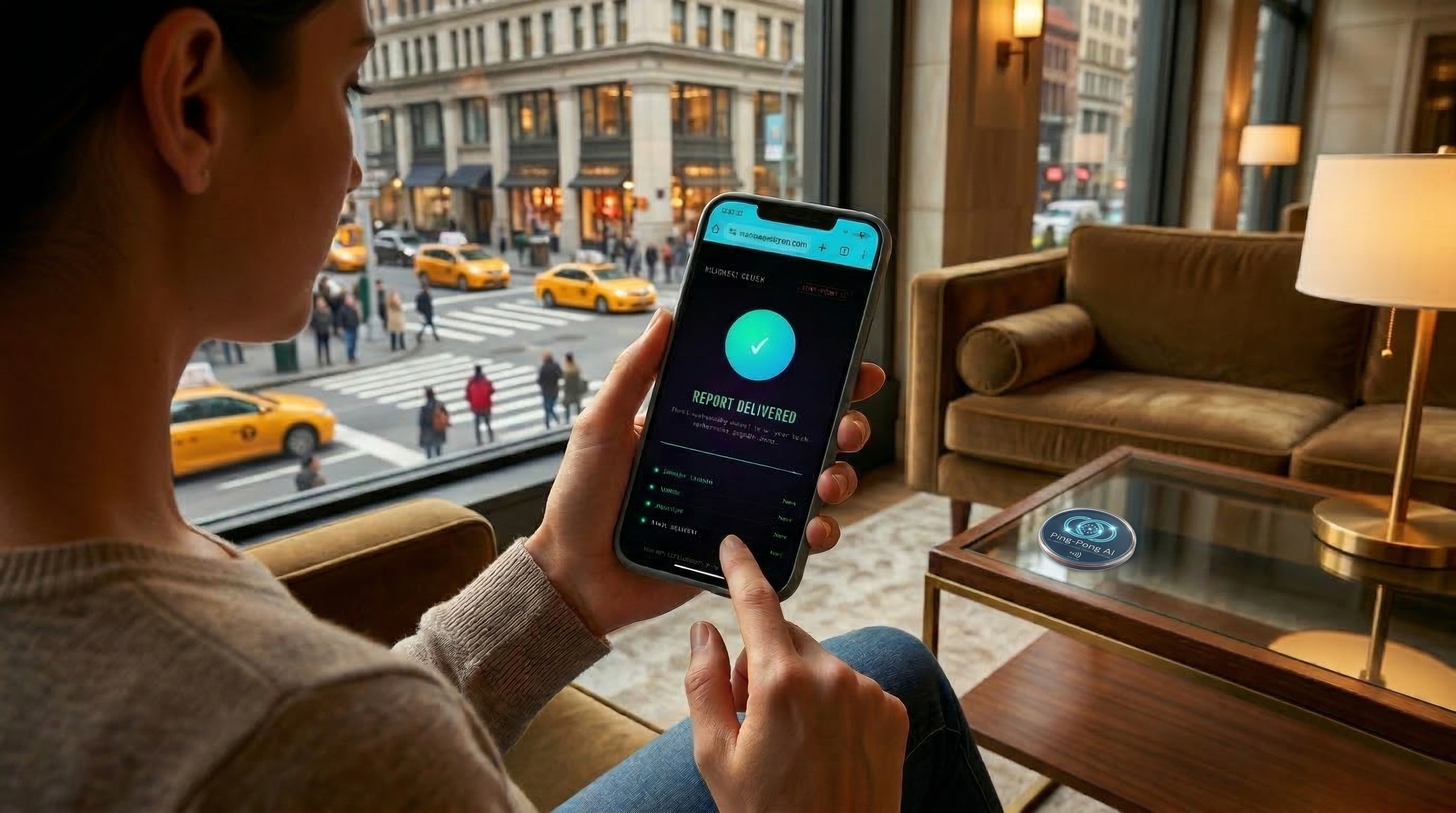
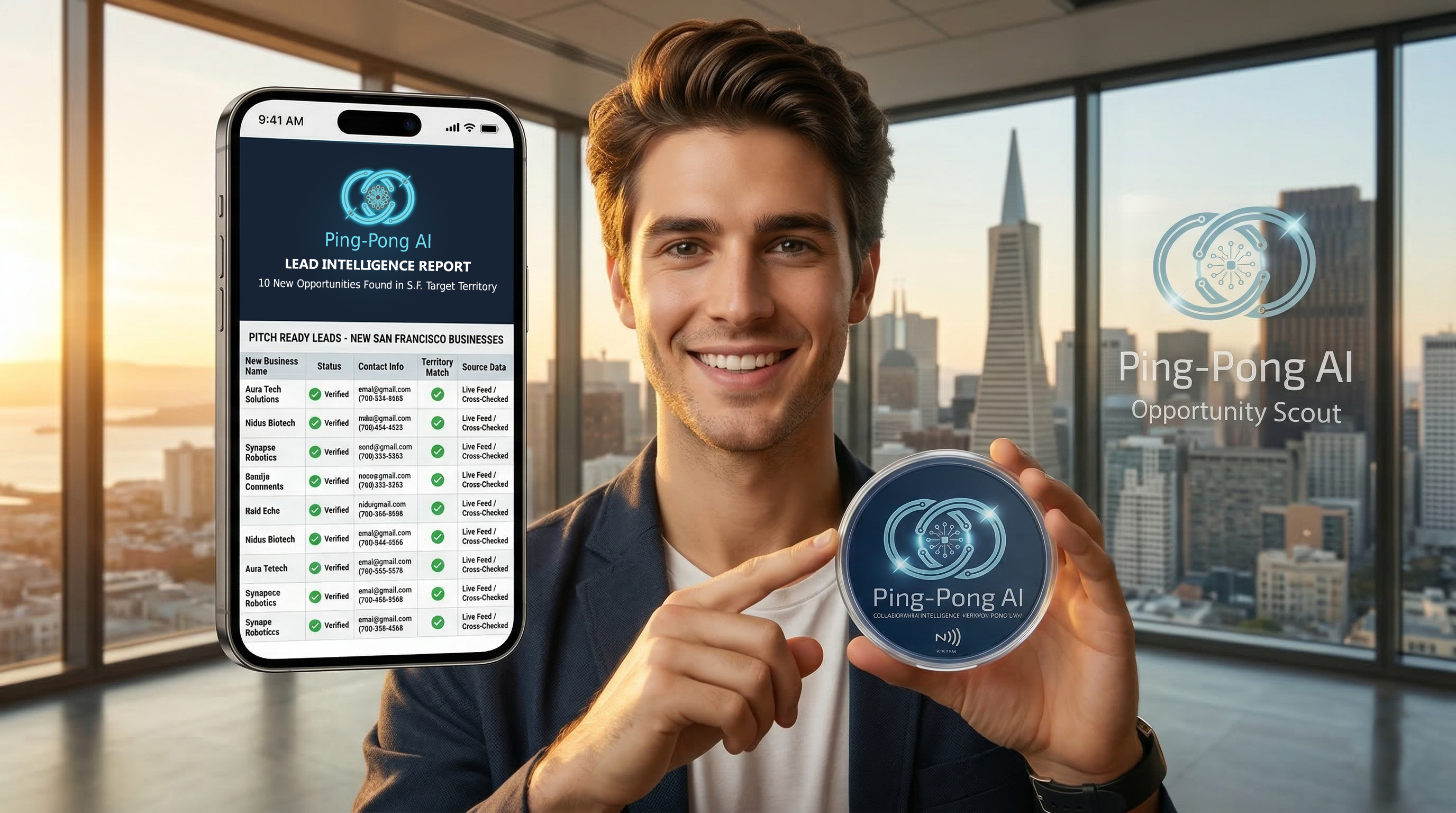
The Opportunity Scout is Ping-Pong AI's™ first deployed workflow. A physical tap of the token triggers the pipeline. Within seconds, it's scanning for new business leads, building a verified intelligence brief, and delivering it to your screen or inbox — without touching a keyboard.
This is what Intentional Ambient Intelligence looks like in production — not a system running in the background without your knowledge, but one that's ready and waiting until you choose to fire it. Tap. Done.

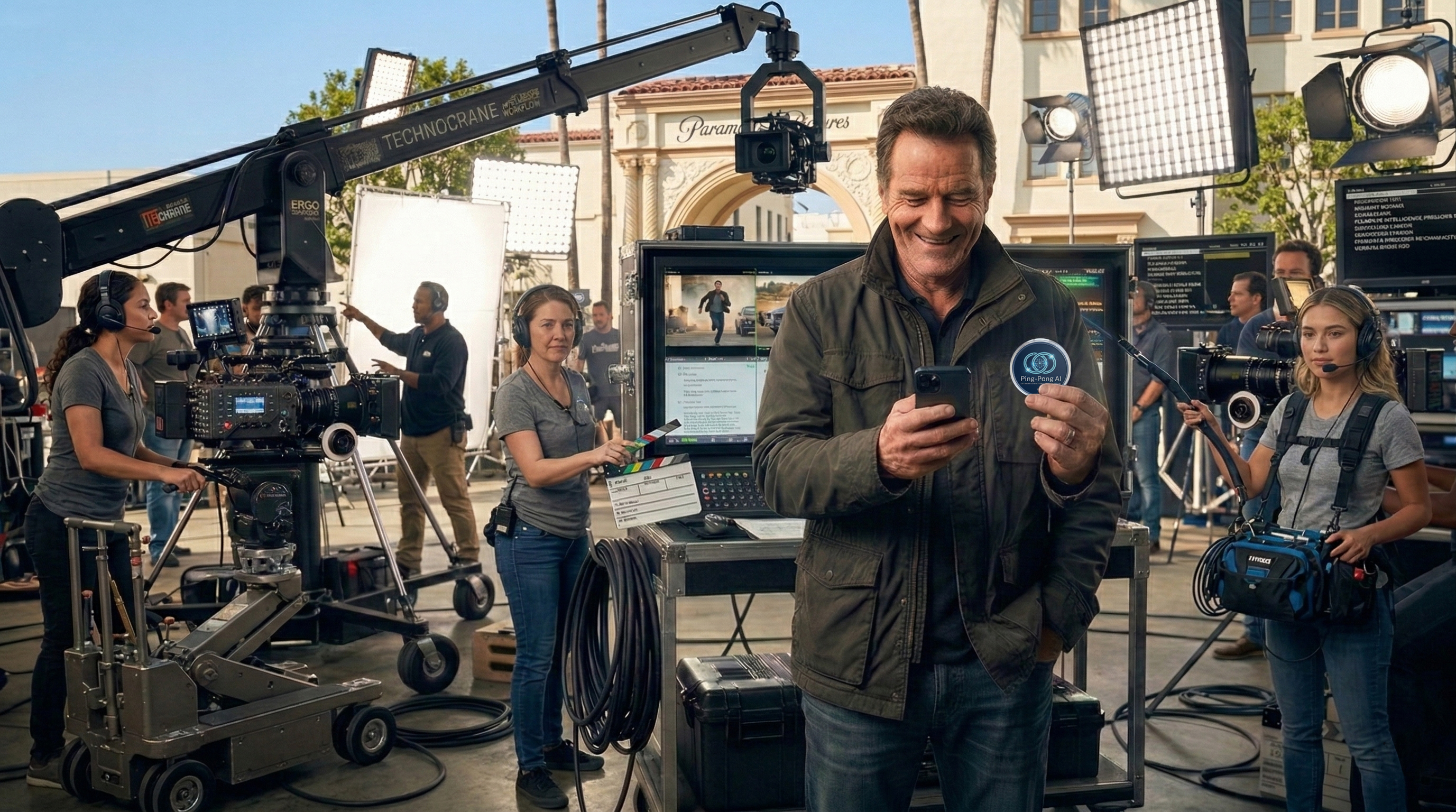
Development. Production. Distribution. The entertainment industry runs on decisions made under pressure with incomplete information. These six Ping-Pong AI™ workflows were built specifically for the lot — from script coverage to opening weekend intelligence. Read how verified AI architecture can improve the way the industry actually works.
Read the Article →Every workflow is custom-built for your specific use case. I scope the architecture around your goal, integrate your tools, and hand you a system that works.
The best technology disappears. A light switch doesn't announce itself — it's part of the wall, waiting for your intention. Tap technology — whether an NFC card, a desk token, or a countertop tag — is the physical remote control for your company's intelligence layer.
Ping-Pong AI™ represents a specific and deliberate evolution of that idea — Intentional Ambient Intelligence. The pipeline fires only when you decide. Not in the background. Not because an algorithm thought it was time. The intelligence is ambient in its presence — always ready, never intrusive — and activated entirely by your choice.
That said — tap technology is not the only path. Ping-Pong AI™ workflows can be triggered by webhooks, schedules, form submissions, or any digital signal you prefer. The architecture is the same. The tap just makes it extraordinary.
Ping-Pong AI™ isn't only a workflow — it's a philosophy about how intelligent systems should behave in the physical world. The ambient systems of the past were designed to sense, predict, and act on your behalf — whether you asked or not. Ping-Pong AI™ is different. Quietly present. Activated by intention. Only when asked.
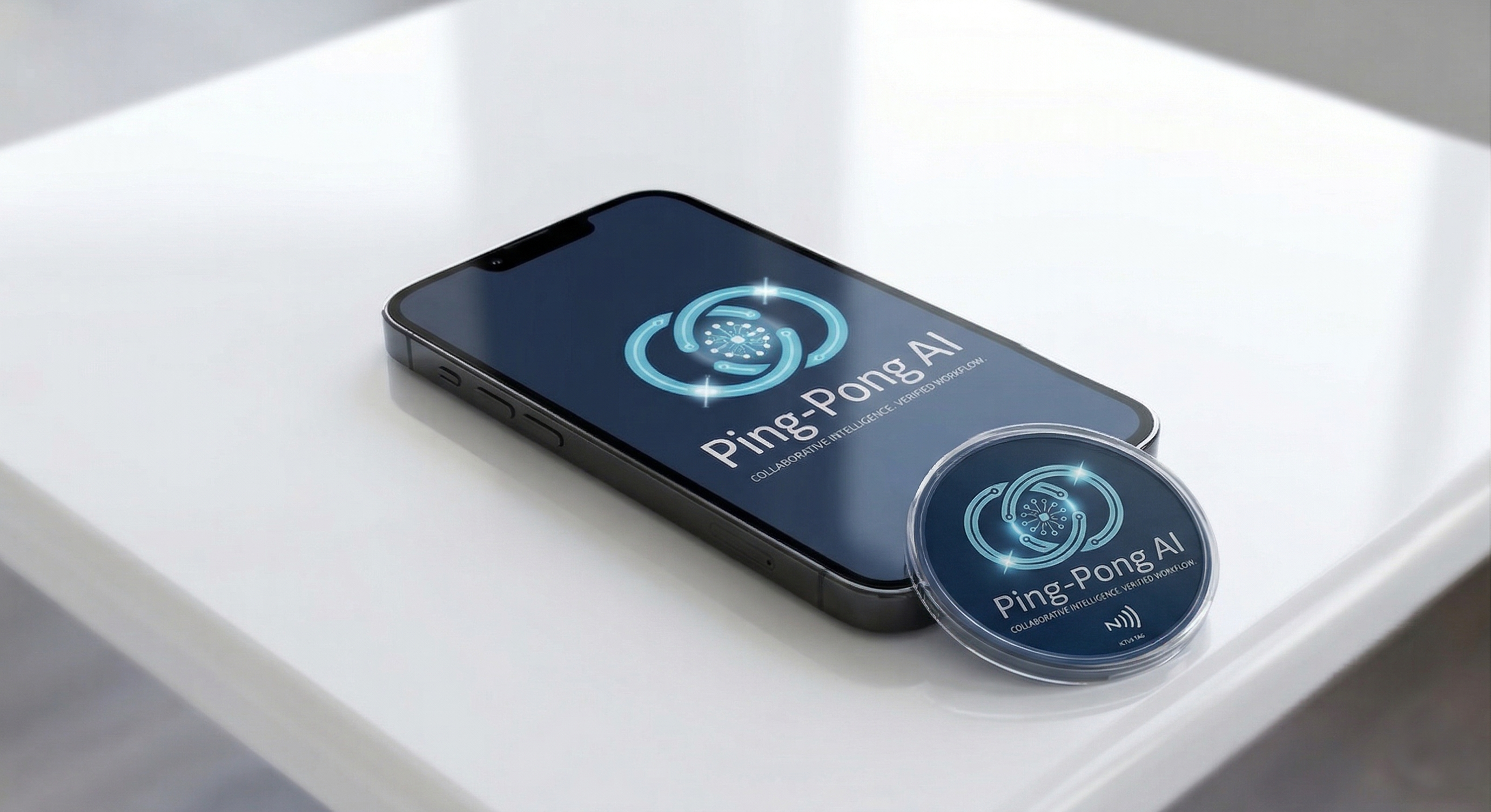
Tap Technology — physical NFC tokens and cards — is the centerpiece of Intentional Ambient Intelligence. When you tap a Ping-Pong AI™ token to your phone, you're doing more than triggering a workflow. You're creating a physical, deliberate moment that binds the human to the machine. It converts AI from a passive cloud service into something you hold in your hand.
A tap is irreversible — you meant to do it. Most ambient systems act on you quietly, in the background, without asking. This one waits. It moves only when you decide to move it.
Tell me what you need on the front end — what task, what outcome, how you want it delivered. Once I know that, I'll scope exactly what needs to happen on the back end and send you a build proposal within 48 hours.
What you'll need: A rough sense of the task you want completed, the method or form of delivery, and an open mind about what's possible. I'll provide the architecture and determine the API keys needed — that's my job.
Philip Warbasse, founder of Warbasse Design, spent 25 years bridging physical and digital worlds for the biggest names in entertainment — HBO, Disney, Marvel, Sony, and many more. He pioneered the first designer QR code on national television in 2010 during HBO's True Blood campaign. His work has been covered by The New York Times, Entrepreneur Magazine, NPR's Marketplace, and KTLA — each time for seeing something the industry hadn't named yet. Today, he maintains an eclectic client roster spanning the full distance between Hollywood and the defense sector — as comfortable in a studio pitch meeting as he is in a room where the decisions have consequences.
Ping-Pong AI™ is the next evolution of that same instinct: make the technology disappear, make the experience intentional, and make the output worth something. Different isn't better than better.